A renewable energy certificate is a receipt, not a wire. It records that one megawatt-hour of renewable power reached the grid, and it gives one party the right to say so.
That single idea explains most of what goes right and wrong with green power claims. Here is what a certificate is, what it records, and what to check before you count one.
The definition, in one line
The U.S. Environmental Protection Agency says RECs are issued when one megawatt-hour (MWh) of electricity is generated and delivered to the electricity grid from a renewable energy resource (EPA, Renewable Energy Certificates). One MWh in, one certificate out.
Why a certificate at all? Power from a wind farm and power from a gas plant mix on the same wires. No meter at your building can tell which electrons came from where. The certificate is how the market keeps count of which megawatt-hours were renewable, and who gets to claim each one.
For scale, 1 MWh is 1,000 kWh. A store that uses 10,000 kWh a month uses 120 MWh a year, so covering that store’s electricity takes 120 certificates. Those are round numbers, for illustration.
What a certificate records
Each certificate carries a short list of facts about the megawatt-hour behind it. These are the ones worth reading:
- Serial number. Unique to that MWh, so the same unit cannot be sold twice without it showing.
- Resource type. Wind, solar, hydro or another renewable source.
- Generator and location. The facility that produced the power, and the state or region it sits in.
- Vintage. When the power was generated, usually by month or year.
- Status. Whether the certificate is still active, has been transferred, or has been retired, and for whom.
Certificates are held in electronic tracking systems and moved from account to account, much like shares. Your seller or your utility holds the account, and most buyers never log in. That is fine, as long as you receive the paperwork described below.
Retirement is what makes the claim
Owning a certificate does not let you claim anything yet. Retiring it does.
Retirement takes the certificate out of circulation for good, in the name of a stated user, for a stated period. Once it is retired, nobody else can sell it or count it. Until then it is a tradable asset, and it could be passed along again.
So the document to ask for is a retirement report, not an invoice. A complete one shows:
- The serial number range, or the certificate IDs.
- The quantity, in MWh.
- The resource type, generator and location.
- The vintage.
- The beneficiary: your legal entity, by name.
- The reporting year or use the retirement covers.
If any of those six is missing, the claim has a gap. An invoice that says “renewable energy, 2,000 units” proves you paid for something. It does not prove what was retired, or in whose name.
Bundled and unbundled certificates
A certificate can travel with the power or on its own.
Bundled means the certificate comes with the electricity. Examples are on-site solar where you keep the certificates, an offsite power purchase agreement that delivers them, or a utility program that retires them on your behalf.
Unbundled means you buy the certificates separately from the power your buildings use. Your sites keep their normal utility supply, and the certificates arrive through a broker or seller.
Both are legitimate instruments, and they support different sentences. Unbundled certificates support a claim about the renewable attributes you bought and retired. They do not change the power arriving at your meter. Whether a purchase helped a new project get built is a fair question, but it is a separate one from whether your claim is supported.
Who holds the certificates
The easy mistake is assuming that the green option you pay for hands you the certificates. It depends on the contract. Here is the question to ask for each option a utility customer can buy:
| Option | Question to ask about the certificates |
|---|---|
| Utility green tariff | Who retires them, for which year, and in whose name? |
| Community solar subscription | Does the subscription pass them to you, or do they stay with the project? |
| Unbundled RECs | What vintage and location, and where is the retirement report? |
| On-site solar | Does a lease, PPA or incentive agreement transfer them to someone else? |
| Offsite PPA | Are certificates delivered with the power, and on what schedule? |
Our green power buyer’s guide sets out what each of these options buys and what it lets you claim, side by side.
Sold certificates, lost claims
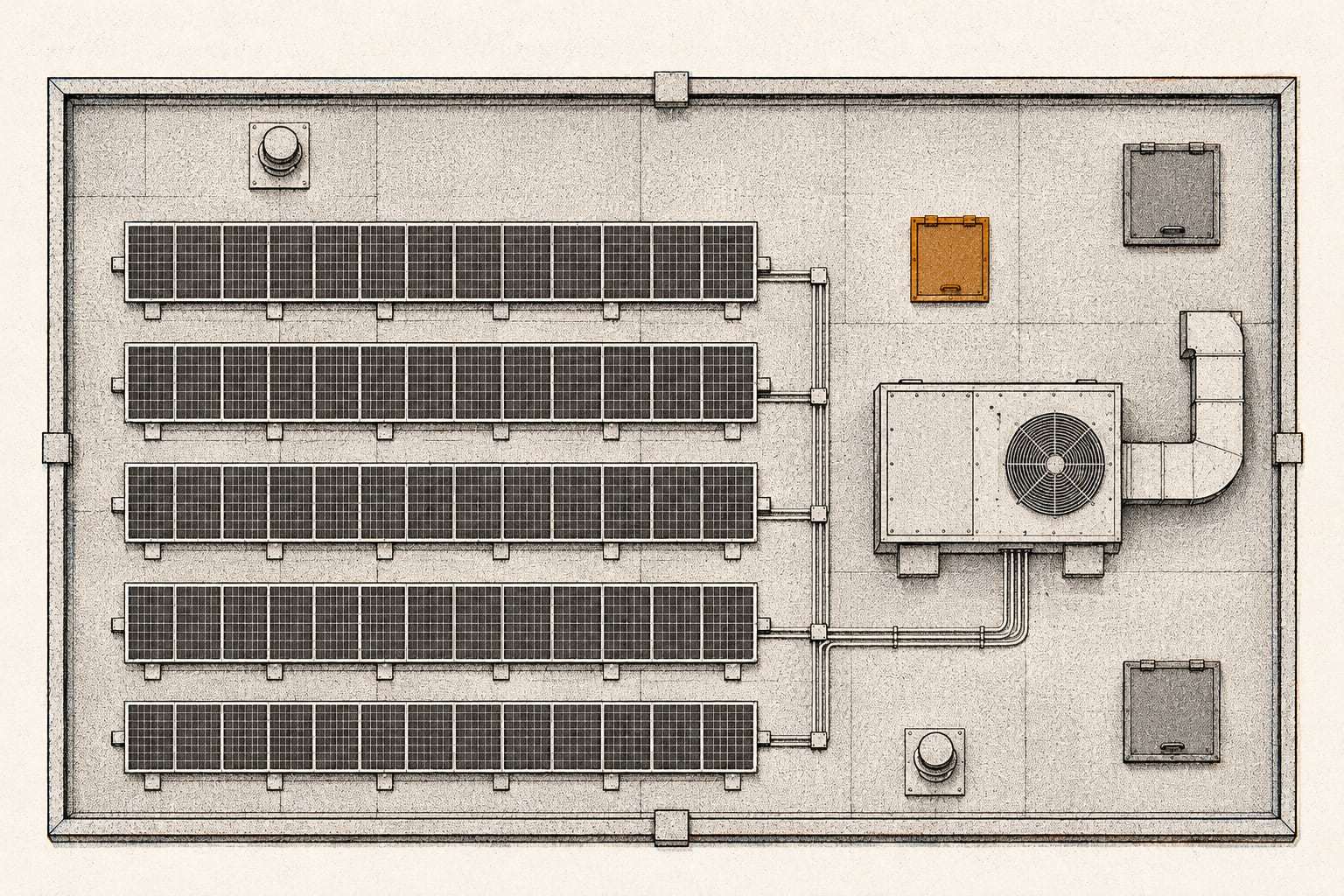
On-site solar is where this goes wrong most quietly. The panels on the roof produce power the building uses. But if the certificates from that power were sold or signed over, someone else owns the renewable claim.
In that case you can say the building hosts a solar array. You cannot say the building runs on solar power, because the certificates that would support the sentence belong to another party. If you want to make a renewable claim anyway, one route is to buy and retire other certificates in your own name.
The general rule is one megawatt-hour, one claim. If the party holding the certificate counts it and the building that used the power counts it too, the same MWh has been claimed twice.
Matching certificates to your use
A certificate claim is a match between two numbers: the MWh your sites used, and the MWh of certificates retired for them. Getting the first number right is a billing task. The monthly data that utility bill tracking produces gives you total MWh by site, by year, from the bills themselves.
A plain sequence:
- Total electricity use for the reporting year, by site, from the bills.
- Decide the scope: every site, a region, or a set share of the total.
- Buy or confirm certificates for that quantity, with a vintage that fits the reporting year under the standard you report to.
- Check whether your reporting framework limits which regions certificates may come from.
- Retire them in your company’s name and file the retirement report with that year’s energy data.
A worked example, with illustrative numbers. A 14-site office portfolio uses 4,200 MWh of electricity in 2026. It retires 2,100 certificates with a 2026 vintage, in its own name. The supported claim is that certificates equal to 50% of its 2026 electricity use were retired. The unsupported claim is “our offices run on renewable power.”
Price is not printed on it
Certificate prices are not on the certificate, and they move. They differ by resource type, region, vintage, volume and whether a recognized certification comes with them.
That makes price comparisons tricky. A certificate from an older project in a distant region is a different product from one generated last year in your own grid region. Compare quotes only when the attributes match, and get each quote in writing with those attributes listed.
A Green Options Study prices certificates against the other green power types for the whole portfolio, using your own load and your own bills.
Five questions before you buy
Before signing a certificate purchase, get written answers to these:
- What resource type, generator location and vintage will the certificates have?
- Will they be retired in our company’s name, and when?
- Which document will show the serial numbers and the beneficiary?
- Does the quantity match our MWh for the year, by site or in total?
- Is anyone else, such as a utility or a project owner, also counting the same MWh?
None of these questions takes a specialist. They take someone willing to read the paperwork as closely as they would read a bill.
Where to go from here
If you already buy certificates, a Clean Claims Check reads one reporting year of retirement records against the renewable claims you publish, and shows where the numbers and the wording part ways. If you are still choosing how to buy green power, our green utility optimization work compares the options for your sites with the tariff math shown.