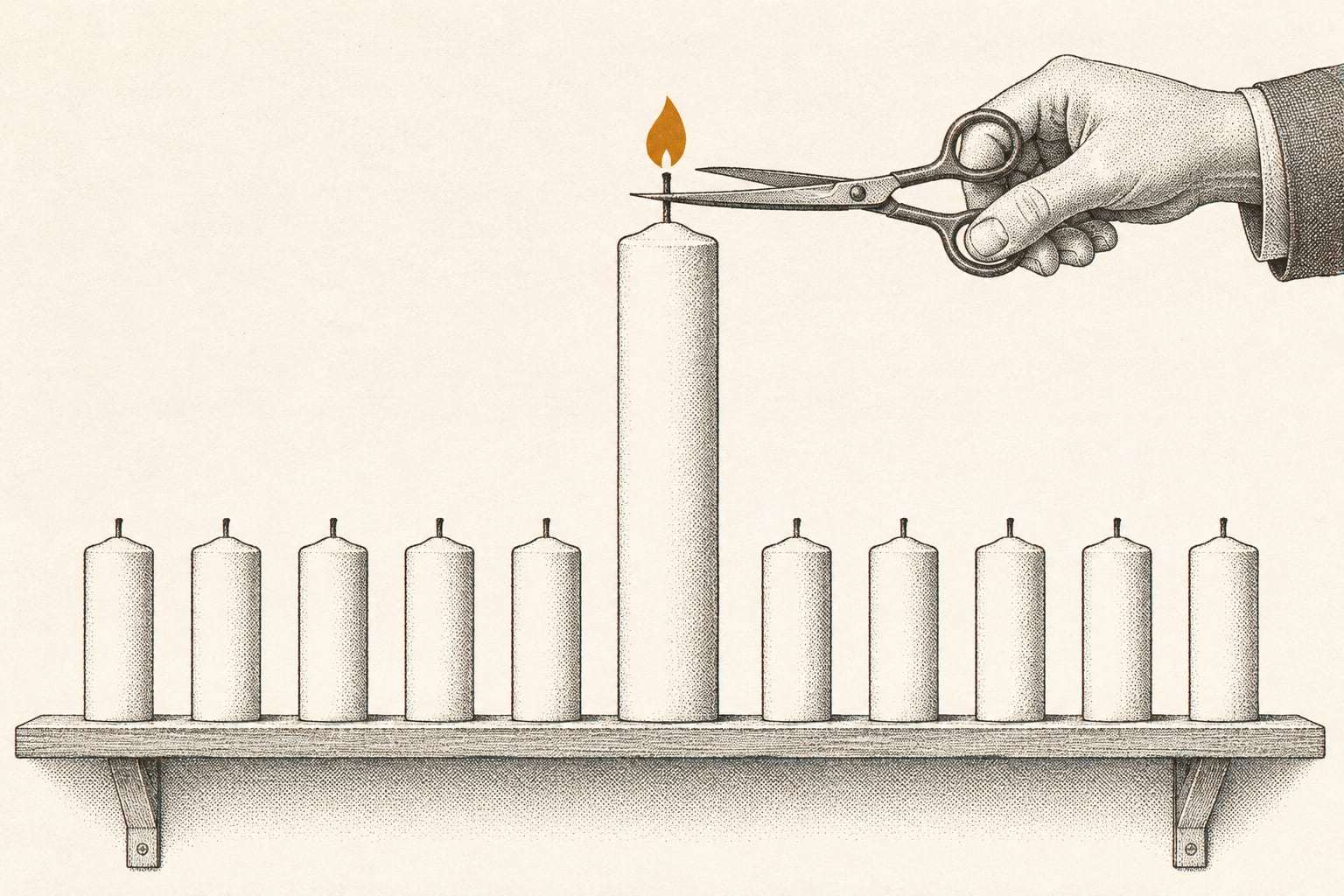
Find the 15 minutes that cost most
We find the intervals that set each demand charge and rank changes.
- Length
- 5 weeks
- Price, indicative
- From $3,200 per site
NREL found demand charges “can account for anywhere from 30% to 70% of a customer’s electricity bill.” Each is typically set by one 15-minute peak. We find those peaks and what ran in them.
Five weeks, one site
- Week 1
Read the demand rules
The current tariff’s demand terms: interval length, on-peak window, and any ratchet carrying a peak forward.
- Week 2
Find the peaks
Twelve months of interval data sorted to the intervals that set each month’s billed demand.
- Week 3
Walk the site
With the site manager, each peak matched to equipment: compressors, ovens, chargers, defrost cycles.
- Week 4
Price the changes
Each change replayed on last year’s intervals: staggered start-ups, pre-cooling, EV charging windows, defrost timing.
- Week 5
Ranked plan readout
A 60-minute call: changes ranked by estimated effect on last year’s bills, and what each needs.
What lands on your desk
- Who it is for
- One site with 12 months of interval data
- Format
- Data review, a site walk-through, a ranked plan and a 60-minute readout
- A peak calendar: the interval that set billed demand in each of the last 12 months
- The equipment most likely running in each peak interval, from the data and the walk-through
- A ranked list of operating changes, each with its estimated effect on last year’s bills
- The replay workbook, formulas visible, so your team can test its own scenarios
- A list of items that need equipment design, for referral to licensed engineers
Where this program fits
A fit when
- Demand charges are a large share of one site’s electric bill
- The site runs heavy equipment that starts or cycles together
- You are adding EV chargers, heat pumps or new refrigeration
- The site has 12 months of 15-minute or hourly interval data
Not a fit when
- The site has less than 12 months of interval data; we need a full year of peaks
- You want equipment designed or replaced; we refer that to licensed engineers
- The site’s schedule has no demand charge; send three bills and we will check
Example: a brewery group’s production site
A brewery group with four taprooms brews at one production site in Arvada on Xcel Energy. Interval data shows eight of the 12 monthly peaks set between 7 and 9 a.m., when the glycol chillers, brewhouse and canning line start within minutes of each other. The plan ranks four changes, starting with pre-chilling the glycol overnight.
Questions about Demand Charge Plan
Do you need to visit the site?
It helps. On the Front Range, an advisor walks the site with whoever knows the equipment schedule, and travel is included. Elsewhere, we walk through by video with your site manager, or visit with travel billed at cost. The data shows when a peak happens; the walk shows what caused it.
Will the plan definitely lower our demand charge?
No plan can promise that, because next year’s operations will differ from last year’s. We replay each change on last year’s actual intervals and show the estimated effect on each bill. Your team decides which changes are workable, and Interval Watch can show whether a change held.
What is a demand ratchet?
Some tariffs bill demand as the higher of this month’s peak or a share of an earlier peak, so one bad interval can raise several bills. We check the current tariff for your site’s schedule. If a ratchet applies, the plan says which past peak is still being billed and until when.
Do you design equipment changes?
No. We find the peaks and rank operating changes: timing, sequencing and setpoints your staff can adjust. Anything involving new controls, batteries or equipment goes to licensed engineers and contractors, with our peak calendar and interval data handed over so they start from the same numbers.
Start with three bills
A 30-minute call, or three recent bills, tells us whether Demand Charge Plan fits your sites.