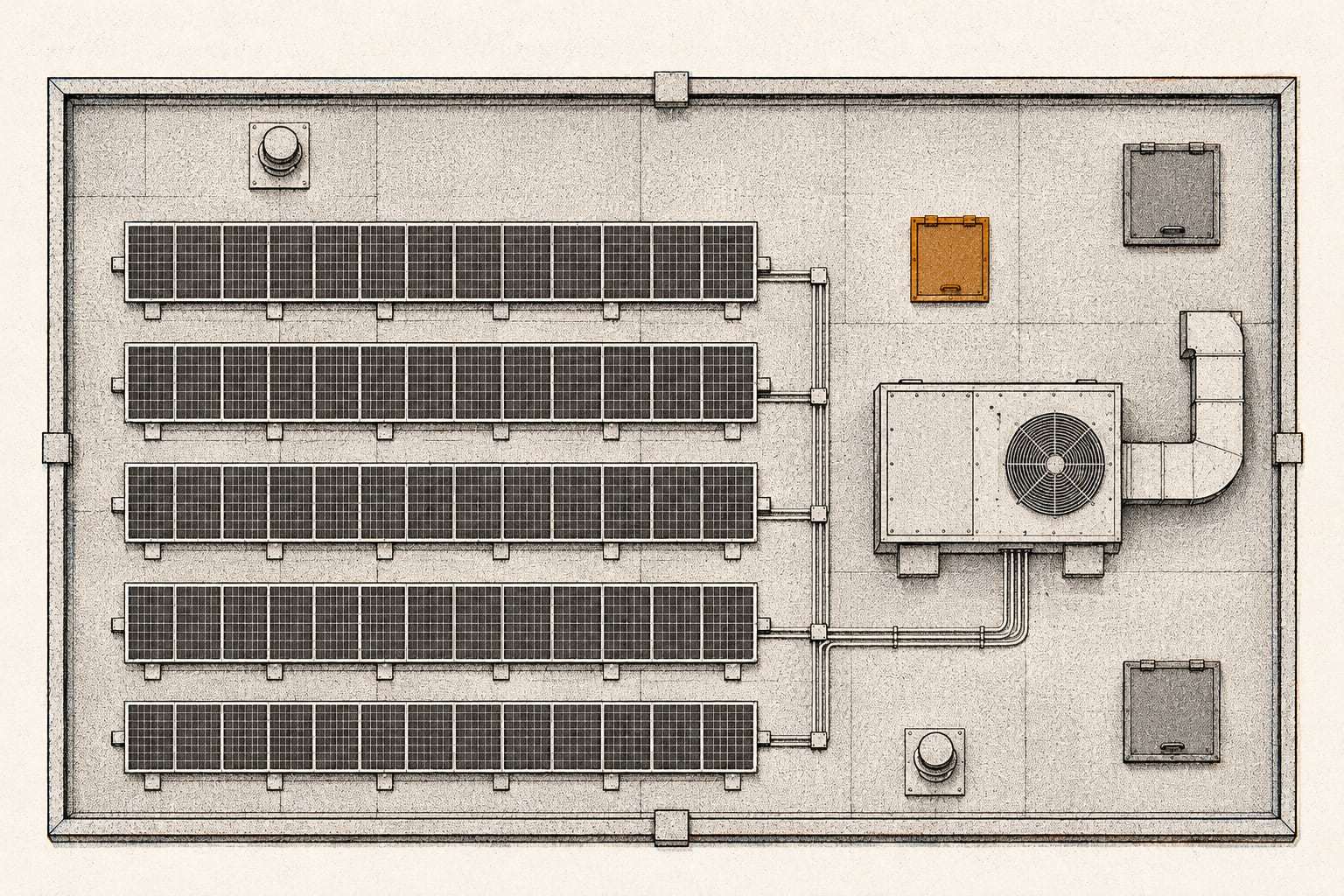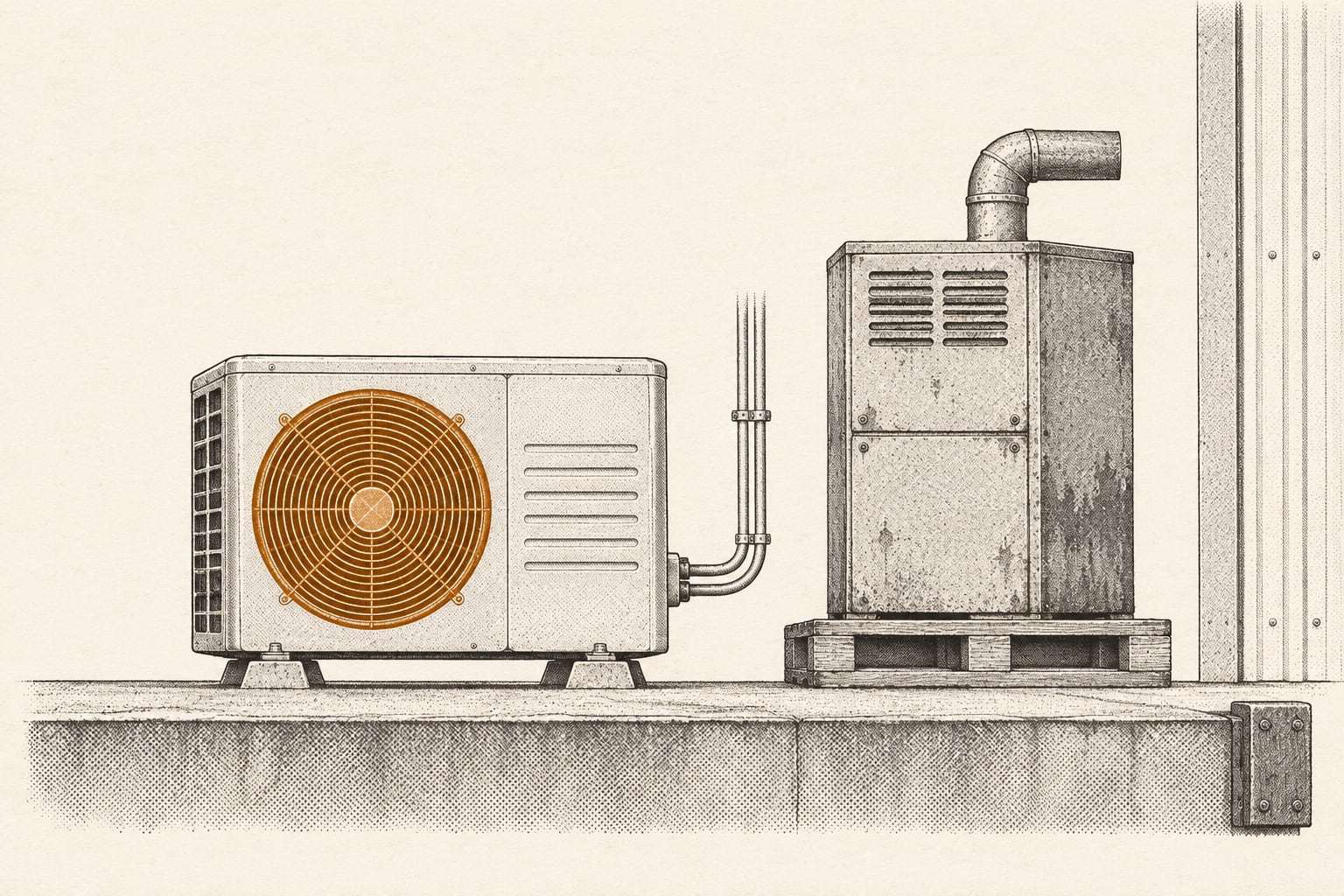
Swap a gas furnace for a heat pump and the heating load moves to the electric meter. On a commercial rate with demand charges, one cold morning can then set the month’s electric bill.
That is not a reason to avoid electrification. It is a reason to plan the peak before the equipment arrives, instead of meeting it on the first January bill.
How demand is billed
A 2017 analysis by the National Renewable Energy Laboratory explains that demand charges are typically based on the highest average electricity usage in a defined interval, usually 15 minutes, during a billing period (NREL, via ScienceDaily). One quarter hour can price the month.
The same NREL analysis, which covered more than 10,000 utility tariffs in 48 states, found that demand charges “can account for anywhere from 30% to 70% of a customer’s electricity bill.” For sites near the top of that range, a new peak matters more than new kWh.
Some schedules add a ratchet, which keeps billing a share of a high peak for months after it happens. Check the current tariff for each account before modeling anything. Our glossary defines ratchets, load factor and the other terms used here.
Where the new load lands
Electrification adds electric load in places that used to burn gas. The timing of that load is what matters for demand.
- Space heating. Heat pumps work hardest on the coldest mornings. Backup electric resistance heat, where installed, adds a large step on top.
- Morning warm-up. A building set back overnight asks every unit to recover at once, often before 7 a.m.
- Water heating. Heat pump and electric water heaters add steady load, with spikes when several recover together.
- Kitchens. Electric ranges, fryers and ovens peak with service, in the same hours as lighting and cooling.
- EV chargers. Several fleet or customer chargers starting together can add more than a small building’s whole peak.
The new peak may also change seasons. A site whose highest demand always came on a July afternoon may find it on a January morning instead.
Example: one office, one cold morning
In this example, with illustrative numbers, a 20,000-square-foot office has a summer peak of 120 kW and a winter peak of 70 kW, with gas heat. The owner replaces the rooftop gas units with heat pumps that include electric backup.
On the first cold snap, the 6 a.m. warm-up runs every unit with backup heat. The meter records 150 kW for one 15-minute interval.
At an example demand rate of $10 per kW, a round number for the math and not a tariff value, the January demand charge goes from $700 to $1,500. If the schedule has a ratchet, part of that peak may keep billing into spring.
Meanwhile the gas bill falls, but not to zero. The gas account’s fixed monthly charges stay until the account is closed.
None of these numbers describes a real site. The pattern is the point: winter, which used to be the low demand month, becomes the high one.
The gas side of the ledger
Electrification is usually judged on the electric bill. The gas bill is the other half of the comparison.
Track the gas account through the change: therms by month before and after, the fixed charges that stay, and any minimum bill. If a site keeps gas for a kitchen or water heating, the account stays open with lower use and the same fixed charges. If the site removes gas entirely, close the account in writing so the fixed charges stop.
Then put both bills on one page. A heat pump project that adds $6,000 a year in electric cost and removes $9,000 in gas cost, in illustrative figures, reads very differently from the electric bill alone.
Check the rate after the change
A site’s rate schedule was chosen for its old load. Electrification changes the load shape: more winter use, a different peak month, sometimes a better load factor.
That can move the account onto a schedule that fits better, or out of one that used to fit. A Rate Fit Review reruns 12 months of bills on every schedule the account qualifies for. After electrification, run it once the site has a full winter of interval data on the new equipment.
Plan the peak before install
Most electrification peaks can be shaped by how the equipment runs. The design is engineering work, done by licensed engineers and controls contractors. The questions to hand them come from the bill:
- What is the site’s current peak by month, from 12 months of interval data?
- What will the new equipment draw at design conditions, including backup heat?
- Can warm-up be staged so units start in sequence, not all together?
- Can backup heat be locked out above a set outdoor temperature?
- Can chargers and water heaters shift away from the building’s peak hours?
A Demand Charge Plan works through these questions for one site, using 12 months of interval data, before the equipment is ordered. Run the current numbers through the demand charge calculator first to see what each 10 kW of new peak would cost on your own rate.
Sequence it across the portfolio
In a portfolio, electrification usually runs site by site as equipment reaches the end of its life. That makes the order a planning decision, not an accident of which unit fails first.
- Sites with low current demand and room under the peak make easier first projects.
- Sites already paying high demand charges need controls planned with the equipment.
- Sites with a reroof, a lease renewal or a solar project coming belong in the same timeline.
A Portfolio Energy Plan orders these projects across up to 40 sites over five years, with each site’s demand and rate effect estimated before the work is funded.
Ask about the electrical service
New electric load can also run into the building’s service: the size of the connection the utility provides and the panels behind it. Adding heat pumps, an electric kitchen or several chargers may need a service upgrade.
That is a question for a licensed electrician and the utility, and it belongs early in the project. A service upgrade can add cost and lead time that the equipment quote does not show. Ask before the equipment is ordered, not after it is on the loading dock.
Read the first winter closely
Interval data before and after each project closes the loop. It shows whether the staged warm-up held the peak where the design said it would, or whether a schedule change on site undid it.
In the first winter after install, look at four things in the 15-minute data:
- the time of day each month’s peak was set
- whether the peak lines up with morning warm-up
- how often backup heat ran, and at what outdoor temperatures
- the peak against the target the engineer designed for
For portfolios on interval or smart meters, Interval Watch reads that data every month, so a new peak is flagged while the controls contractor can still adjust the sequence.
Before you sign the equipment contract
A short list to work through with facilities and finance:
- 12 months of interval data for the site, pulled and saved
- the current rate schedule, with any ratchet noted
- the new equipment’s full draw, including backup heat, from the designer
- a controls sequence for warm-up and backup lockout, in writing
- the gas account’s fixed charges after the change
- a date to rerun the rate comparison after the first winter
If any item is blank, the project is still a good idea. It just is not ready for a signature yet.
Where to start
Bring one site with a planned heat pump or charger project to a Demand Charge Plan before the equipment order goes in. If several sites are in line, a Portfolio Energy Plan puts them in an order the bills can absorb.