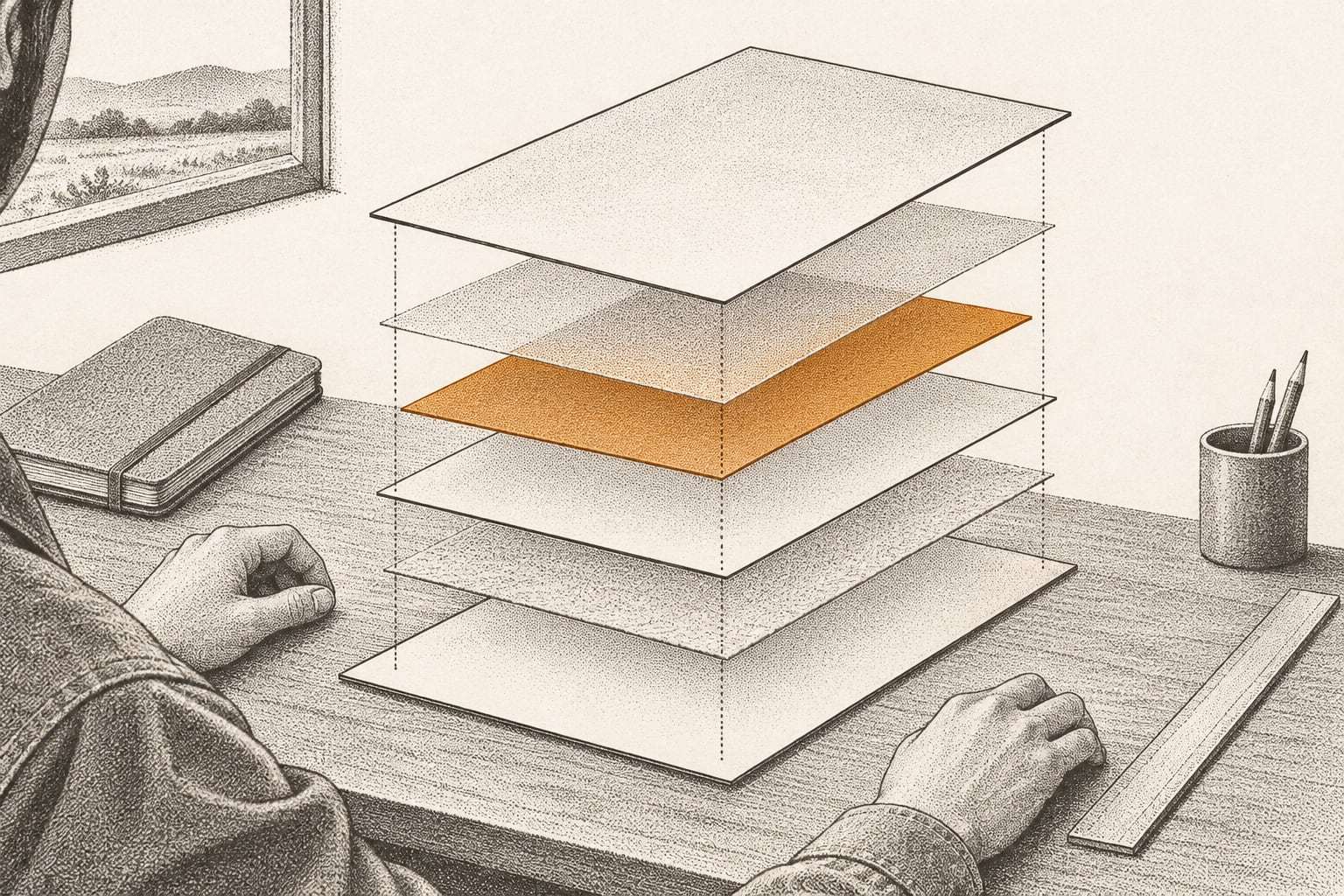
Most bills get two glances: the total and the due date. This guide reads the parts in an analyst’s order, each depending on the one above.
Layouts differ by utility; the parts do not.
Seven parts, in reading order
Start at the account block and work down. A mistake high on the page carries into every line below it.
Account and meter
Account number, service address, meter number and multiplier. Confirm the meter belongs to this site.
Read dates and type
Start and end dates, days in the period, and whether each read was actual or estimated.
Energy usage
Kilowatt-hours used: the read difference times the multiplier. Compare with the same month last year.
Peak demand
Per NREL, usually the highest average use over a 15-minute interval. One afternoon can set it.
Rate schedule
The tariff code the account is billed on. It decides every price on the page.
Riders and adjustments
Charges or credits the tariff adds on top of base prices, such as fuel cost recovery.
Taxes and fees
Sales tax, city franchise fees, late fees and any prior balance carried forward.
Each line, and what to check
The lines you will find on most commercial electric bills, in the order they usually appear.
| Line item | What it means | What to check |
|---|---|---|
| Meter multiplier | The factor that turns dial reads into true kWh and kW on larger services. | It matches last year’s bills. A changed multiplier changes every number below it. |
| Read type | Actual or estimated, often printed as A or E beside each read. | Two estimates in a row, and the size of the true-up bill after them. |
| Days in period | The days between the start and end reads. | No gap or overlap with the last bill. Long periods inflate month-to-month comparisons. |
| Energy (kWh) | Electricity used over the period. | The same month last year, allowing for weather, hours and new equipment. |
| On-peak and off-peak kWh | Usage split by time of day on time-of-use schedules. | The split adds up to total kWh, and the hours match the tariff. |
| Billed demand (kW) | The kW figure the demand charge is priced on. | Whether it equals measured peak or comes from a ratchet or minimum. |
| Power factor | How efficiently the site draws power. Some tariffs adjust demand when it runs low. | Whether an adjustment line appears, and whether your schedule allows one. |
| Rate schedule | The tariff section that sets every price on the bill. | The site still qualifies, and another schedule does not fit the load better. See the Rate Fit Review. |
| Customer charge | A fixed monthly charge per account or meter. | One charge per account as the tariff sets, and none on closed accounts. |
| Riders | Extra charges or credits the tariff adds, changed by the regulator from time to time. | Each rider applies to this schedule, and none is billed twice. |
| Taxes and franchise fees | Sales tax and city fees collected through the bill. | The city matches the service address, and any exemption on file is applied. |
| Late fees and prior balance | Amounts carried forward from earlier bills. | No late fee on a bill paid on time, and payments credited to this account. |
Bill reading questions, answered
Why is the demand charge so large next to our usage?
Because demand is priced on your single highest interval, not on total use. NREL describes demand charges as typically based on the highest average usage in a defined interval, usually 15 minutes. A store that runs gently all month but starts every rooftop unit at once on one July afternoon pays for that afternoon all month.
What does an estimated read mean for the bill?
It means the utility did not read the meter and billed a calculated figure instead, usually from past use. The next actual read corrects the total, so a run of estimates can end in a large true-up bill or a credit. Two estimates in a row are worth a call to ask why the meter was not read.
Where do we find the rate schedule?
Usually near the account details or beside the usage section, printed as a short code or schedule name. Match that code to the utility’s current tariff book, which utilities publish online, to see the prices and rules that apply. If the bill does not show it, the utility’s business service line can tell you.
Is a gas bill read the same way?
Mostly, yes. Account and meter, read dates, usage, rate schedule, riders and taxes all appear in a similar order. Gas use is measured in therms or hundreds of cubic feet, often converted with a heat content factor printed on the bill. Small commercial gas schedules rarely carry a demand charge; check the tariff for larger accounts.
Can you read a bill for us?
Yes. Send three recent bills for a free Three-Bill Read, and we return a written read of what each line means and what looks off within five business days. It covers electric, gas and water bills from any U.S. utility, and nothing is owed afterward.
Have an analyst read yours
Send three recent bills for a free Three-Bill Read, returned in writing within five business days.